

Red Light Therapy
Light to support your body’s capacity for healing and recovery.
A flexible red and near infrared light therapy pad for use at home: available from Bora Vera
Therapeutic light.
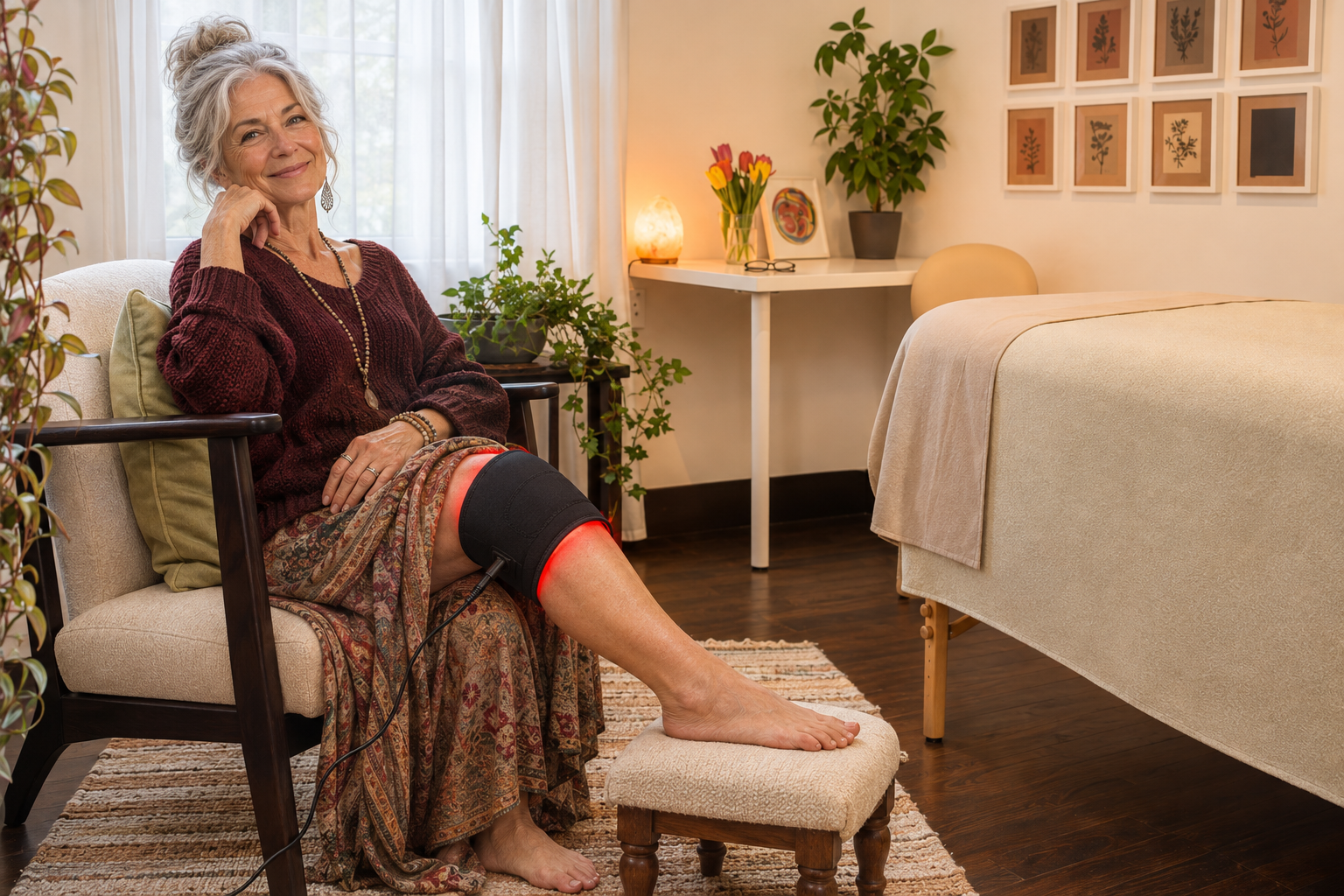
Care that fits into your life.
Perhaps you’ve strained your elbow, feel sore after a workout, or are stiff after shovelling snow. Perhaps aching knees or hips are making everyday movement less comfortable. Maybe you are just low on energy or do not sleep as well as you used to. When discomfort gets in the way, finding appropriate support matters.
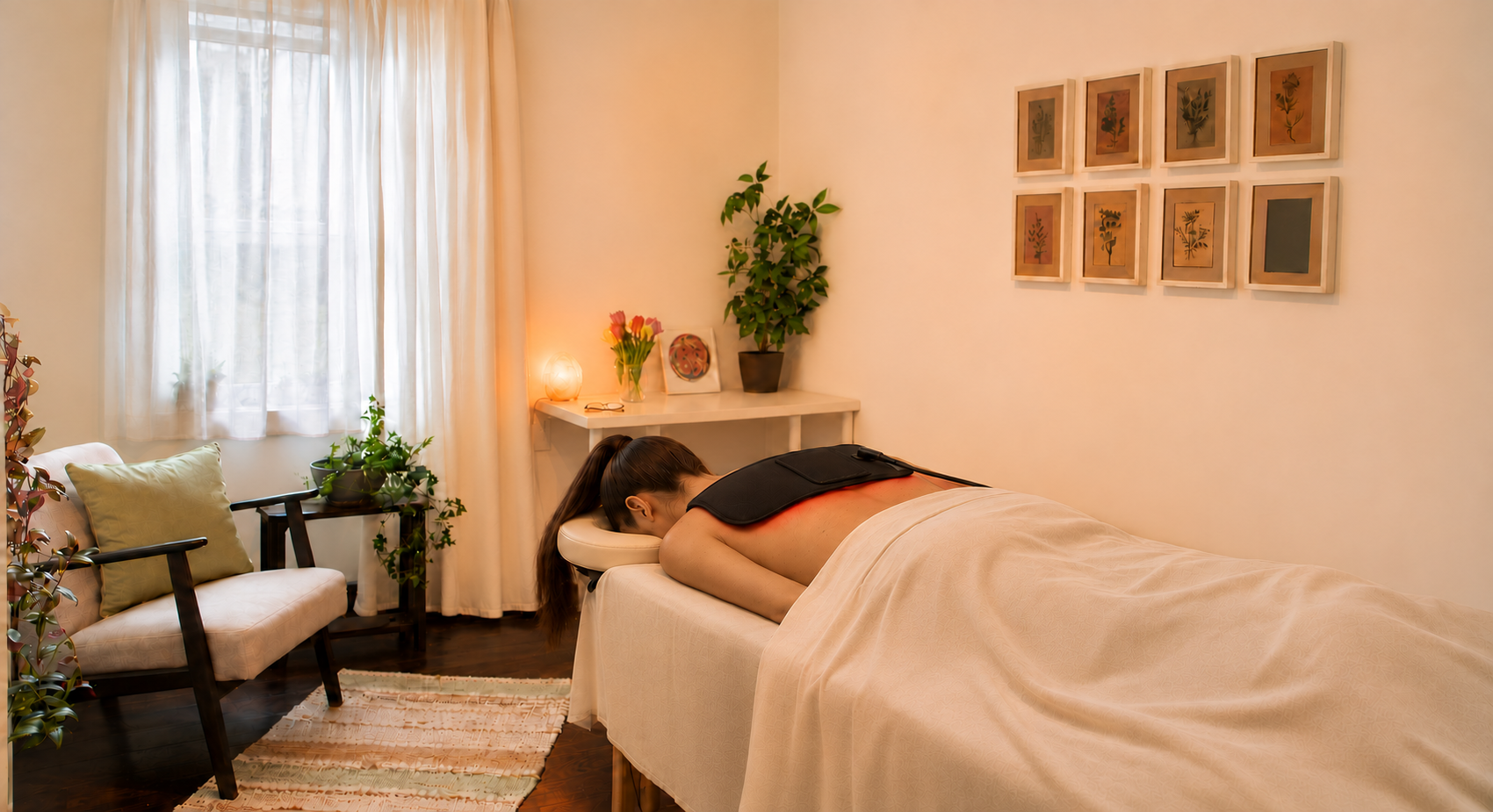
The Bora Vera Red Light Therapy Pad brings targeted red and near-infrared light into your home. Its soft, flexible design fits around areas such as the knee or rests across the shoulders or back, with adjustable brightness and timing to guide your sessions.
Consistency matters. Rather than occasional longer sessions, aim for a regular daily routine of 15 minutes, following the recommended schedule in the user manual.
Position the pad as directed, choose your settings, and settle into a comfortable position. A dedicated time to attend to your body—and a moment to unwind.
Wondering whether the pad is appropriate for your needs? Get in touch to learn more.
The Bora Vera Red & Near Infrared Light Therapy Pad
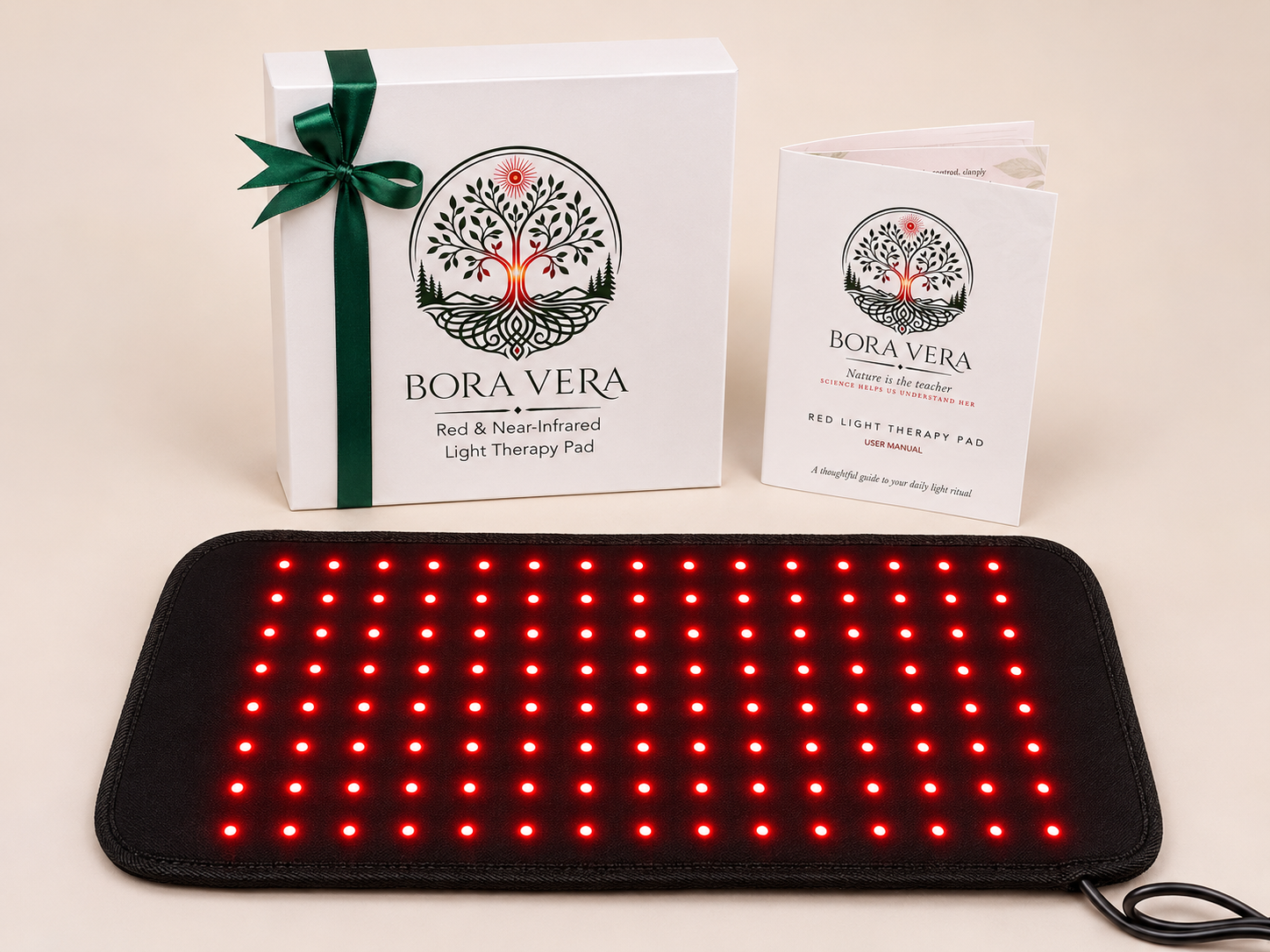
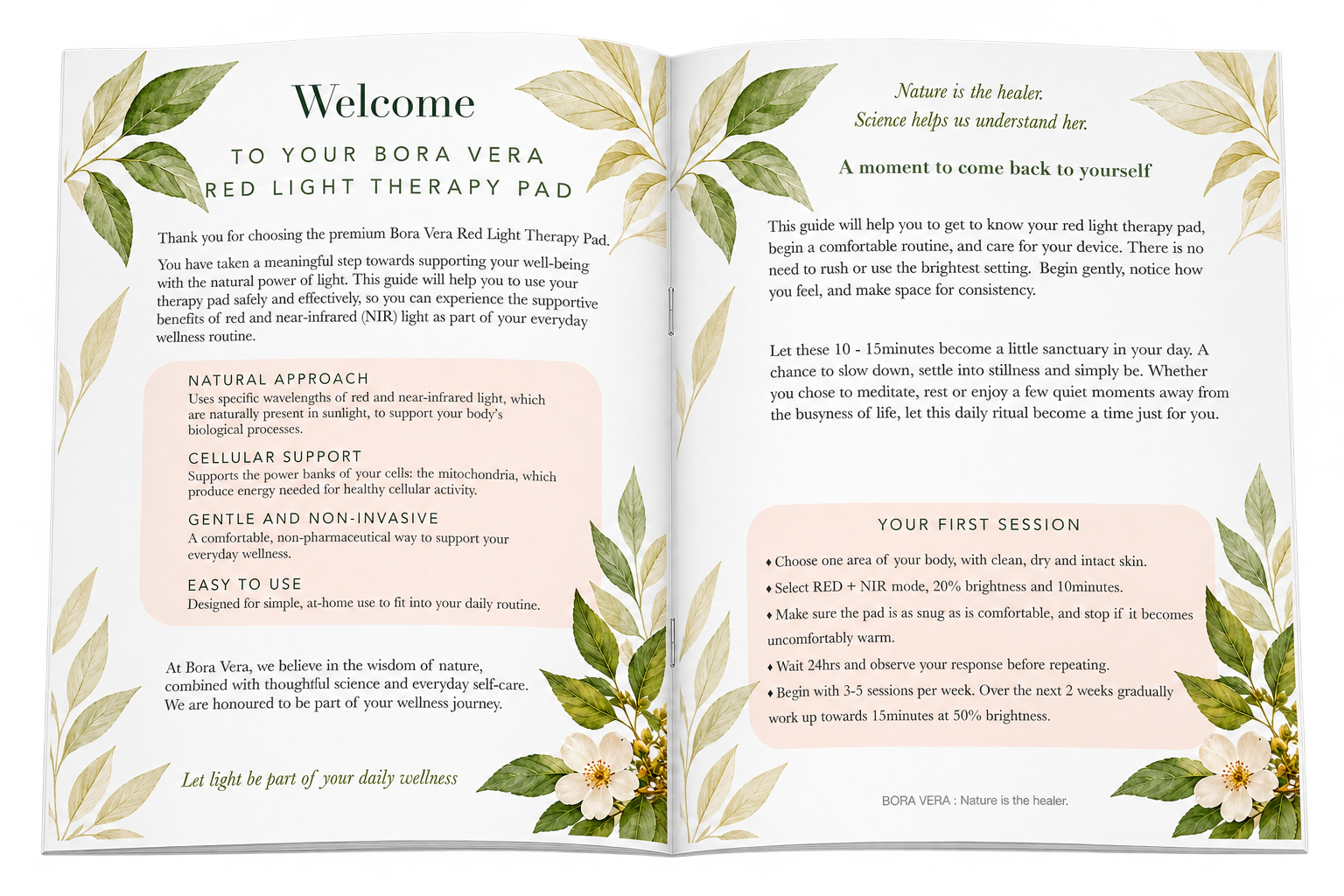
A flexible light therapy pad with adjustable settings and a detailed user guide to help you get started.
Soft, flexible design for positioning around different areas of the body.
Overall size: 17” x 8”
120 Quad-chip LEDs (480 LED chips in total) each containing four chips that deliver wavelengths: 630 and 660 nm red light, and 830 and 850 nm near-infrared light.
You can choose red light, near-infrared light, or both together.
Adjustable brightness and session timer
Automatic shut-off at the end of your session.
Settings remembered for your next use.
One-year manufacturer’s warranty covering defects in materials or workmanship under normal use.
The pad connects to a power supply during use.
Your package includes:
The therapy pad, controller, power adapter, elastic velcro fastener, and Bora Vera user manual
$275 CAD, + HST
Why I Chose this pad
Exploring red light therapy, also known as photobiomodulation, can feel overwhelming. With so many devices available, it can be difficult to know where to begin.
Having used these pads myself for over 2 years and experienced their benefits, I wanted to make them available at an accessible price within my own community. A number of clients now use them at home and have reported benefits for soft tissue discomfort, persistent pain and muscular tension.
I selected this flexible pad for its practical design and adjustable settings, and its ease of use at home. To help you feel confident getting started, I have also written an accompanying guide with clear instructions and protocols for your use at home.
If you would like to learn more about the pad, you are welcome to get in touch.
How does it work?
Light that works at a cellular level
Your body’s ability to maintain and repair itself depends on the activity of its cells. Red and near-infrared light can influence that activity through a process called photobiomodulation—using specific wavelengths of light to affect biological processes.
How does it work?
When these wavelengths reach your tissues, some of the light is absorbed by light-sensitive molecules. This can set off changes in how cells produce energy and communicate.
Much of the research focuses on the mitochondria, the tiny structures within cells that produce most of our ATP—the energy-carrying molecule that helps power everyday cellular work. Scientific studies show that red and near-infrared light can increase ATP production and influence signals involved in cellular stress and repair.
What can these changes do?
Photobiomodulation can influence the signals involved in inflammation and tissue repair. Many clinical studies have now proven benefits for certain applications, including relief of pain from some musculoskeletal pain conditions, and an increase in healing processes, and a reduction in inflammatory processes.
Why red and near-infrared light?
Both can enter tissue, but they are absorbed and scattered differently. Red light is commonly used for treatments closer to the skin’s surface, while near-infrared light generally reaches further into tissue. The amount that reaches a particular area depends on the wavelength, the device and the tissue itself.
The biphasic dose response: why dosage matters
Photobiomodulation can follow a biphasic dose response: a lower dose may stimulate beneficial cellular activity, while a higher dose may produce less benefit or inhibit that activity.
Too little light may produce little measurable effect. Within an appropriate dose range, studies have observed increased ATP production and changes in cellular signalling associated with repair. At excessive doses, these effects can diminish or reverse, and oxidative stress may increase.
This response depends on the wavelength, light intensity, exposure time and condition of the tissue. There is no single optimal dose for every person or application, and so longer or brighter sessions are not necessarily more effective.
Clients’ Experiences with the
Bora Vera Red Light Therapy Pad
A few practical questions
-
The pad is flexible and connects to a power supply. Position it over clean dry skin and snug it into place with the velcro elastic strap, avoiding sharp folds. Select the light mode, brightness, and session time, and start your session. It switches off automatically when the selected time ends.
-
We recommend that you start with 10 minutes at 20% brightness and work up to 15 minutes at 50% brightness. A consistent daily routine is key. Longer or brighter sessions may be counterproductive. See manual for details.
-
Results are different for everyone, depending on why you are using the pad. Acute local issues might see changes in a week, more systemic chronic issues might take 6 weeks.
-
Red light therapy is a non-pharmacological (drug-free) approach that is generally considered low-risk when used as directed. Unlike sunlight, it does not expose you to ultraviolet (UV) radiation. However, it may not be suitable for everyone, and safety research is limited for some groups.
Speak with your healthcare provider before use, particularly if you have a pre-existing medical condition, epilepsy, sensitivity to light, or use medications or products that increase light sensitivity.
Avoid use over actively bleeding wounds, and exercise extra care over tattooed areas. If you have sensitive skin or a darker skin tone, seek advice about suitable settings and begin with short sessions at a low intensity, following the device instructions. Monitor your skin’s response and stop if you notice excessive warmth, discomfort, irritation or changes in pigmentation.
-
To keep your pad in good condition and help extend its lifespan, store it flat with no heavy objects resting on top. It is important to avoid bending or folding it sharply as this can damage the delicate wiring connecting the LEDs. Keep the pad dry, always disconnect the power before cleaning, and follow the care instructions provided.
-
Please email to arrange purchase and collection in Mahone Bay. The pad includes a one-year manufacturer’s warranty for defects in materials or workmanship under normal use. Exclusions apply, including accidental damage and misuse. Please contact Bora Vera if you experience a problem.